What is Task-oriented Training & How to Do - Acidente Vascular Cerebral Center
Task-oriented training (TOT) is a popular novo tecnologia for upper membro funcional reabilitação after acidente vascular cerebral based on motor control and motor learning. Task-oriented training is a funcional task based on the interaction between the individual, the task and the environment. Pacientes pode actively try to solve problems encountered in funcional tasks while adapting to changes in the environment, and ajudar pacientes learn methods to solve target tasks.
Theoretical basis of task-oriented training
TOT is the most representative clinical retraining method based on motor control theory. It focuses on training funcional tasks and adaptability to environmental changes. The functions obtained through training must be able to be transformed into the real environment. It is a training method that designs specific tasks or activities based on individual abilities and training goals and guides pacientes to complete these tasks or activities through active attempts to melhorar motor skills.
Repeated task-oriented training pode affect the adaptability of the central nervous system and promote the reorganization of brain functions. Factors that promote funcional reconstruction incluir repeated reinforcement, interest, challenge, social communication, and specific rather than abstract training projects or goals. The goals and tasks set by task-oriented training are concrete rather than abstract. For example, taking the upper membro to pick up an object is a specific task. Completing this action involves visual and tactile input, and the brain judges and integrates information. And the eficaz control of the system by the nerves, and then through the feedback of failure or success, the movimento pattern is continuously adjusted to form an optimized neural network and movimento program, which controls the specific sequence, speed, strength and other mechanical characteristics of the relevant muscles to complete this specific task. Promote the development of adaptability, feedforward and coordination abilities. However, if the upper membros only do flexion and extension or simple extension without specific goals, the information input and integration mentioned above will be lost, and the movimento mechanics characteristics will be completely different, turning it into an empty joint activity. Task-oriented training also emphasizes active participation in controlled application and individualized tratamento, mainly focusing on funcional training in daily life and repeated reinforcement.
Clinical Application of Task-Oriented Training
TOT focuses on ajudando pacientes acquire the ability to solve problems, and its related theories and methods are increasingly widely usado in the reabilitação tratamento of pacientes with various motor functions, especially motor dysfunction caused by central nervous system damage. In the past ten anos, many scholars have focused on TOT and continued to explore and optimize applicable groups and clinical reabilitação programs. Studies have found that TOT combined with mirror terapia pode melhorar mão motor função in pacientes with unilateral neglect after acidente vascular cerebral. Based on conventional training, task-oriented training is supplemented, and mirror terapia is usado to activate before each task-oriented training.
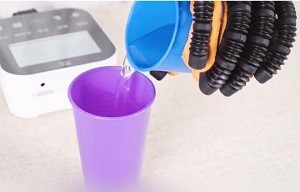
Mirror neuron system, task-oriented training applies the learned mirror movements to real-life activities, such as practising pronation and supination of the forearm, flexion and extension of the wrist joint, and grasping and relaxing of the mão in a mirror environment. Practice grabbing a cylindrical bottle or moving a cup to the perioral area in a real environment. In addition, for pacientes with upper membro and mão dysfunction after acidente vascular cerebral, transcranial direct current stimulation combined with task-oriented training pode be usado to ajudar pacientes complete common daily activities such as reaching for objects, grabbing and placing water cups, and completing drinking water.
The results show that a combined program of task-oriented training pode reduce muscle tone and promote motor função recuperação in acidente vascular cerebral pacientes. It was found through resting-state magnetic resonance studies that the above combined program incluindo task-oriented training had a significant impact on resting-state spontaneous atividade cerebral. The underlying neural mechanism for promoting the recuperação of motor função in acidente vascular cerebral pacientes may be related to the ALFF in the anterior cerebellar lobe. Enhance relevance. The TOT program combined with motor imagery refers to task-oriented training that is performed immediately after the paciente completes the motor imagination. The motor movements in the imagined environment are applied to actual activities, such as eating movimento exercises of the upper membros. Research results prove that this program pode reduce the risk of acidente vascular cerebral. The funcional connection between the MI area and the SMA area on both sides of the paciente was enhanced, which promoted the normalization of cerebral cortical remodelling in acidente vascular cerebral pacientes. The DTI analysis results showed that the FA value of the affected hemisphere in acidente vascular cerebral pacientes increased, which also suggested that this program promoted the myelination of myelinated fibres. The reshaping of elements. In terms of lower membro função, transcutaneous acupoint estimulação elétrica combined with task-oriented training pode significantly melhorar the lower membro motor função and walking ability of pacientes with hemiplegia after subacute acidente vascular cerebral and enhance their ankle joint control.
In summary, task-oriented training pode melhorar the funcional impairment of acidente vascular cerebral pacientes, strengthen their daily activities, and melhorar their quality of life. It is worthy of further research and promotion.
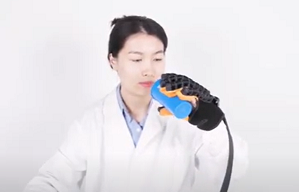
You pode also conduct task-oriented training with Syrebo Mão Reabilitação Robô. How to do? Check out our reabilitação class to learn more