People with obsessive-compulsive disorder have three times the risk of acidente vascular cerebral - Acidente Vascular Cerebral Center
Obsessive-compulsive disorder (OCD) is a serious chronic mental illness, which is mainly manifested as recurring obsessive thoughts or behaviors, incluindo obsessive suspicion, fear of dirt, symmetrical needs, over-organization, repeated inspections, etc. It is characterized by recurring And unwanted thoughts and behaviors. Previous studies have found that obsessive-compulsive disorder usually occurs after a acidente vascular cerebral or other brain injury. At present, it is not clear whether OCD will increase the risk of acidente vascular cerebral.
Recentemente, researchers from the Department of Psychiatry at the Chinese Taipei Veterans General Hospital published a research paper entitled "Increased Risk of Acidente Vascular Cerebral in Pacientes With Obsessive-Compulsive Disorder: A Nationwide Longitudinal Study" in the "Acidente Vascular Cerebral" journal of the Journal of the American Heart Association.
The study found that adults with obsessive-compulsive disorder have more than three times the risk of ischemic acidente vascular cerebral in later life than adults without obsessive-compulsive disorder.
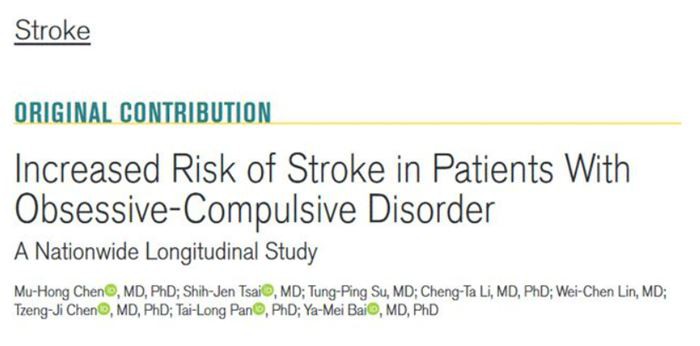
The researchers checked the health records from 2001 to 2010 in the Taiwan National Health Insurance Research Database to compare the acidente vascular cerebral risk of 28,064 adults with OCD and 28,064 adults without OCD. The average age of obsessive-compulsive disorder diagnosed is 37 anos, and the proportion of women and men in the data is almost equal. The researchers compared the 11-ano acidente vascular cerebral risk between the two groups.
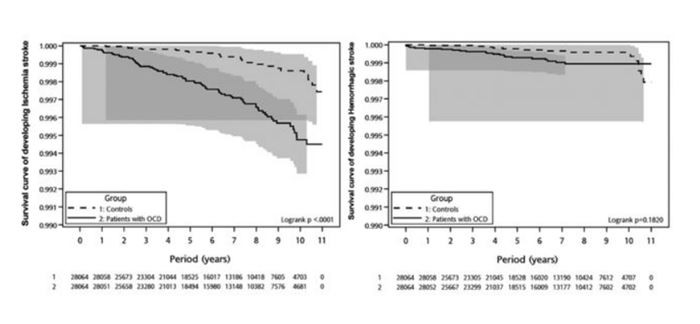
Survival curve of ischemic or hemorrhagic acidente vascular cerebral in the obsessive-compulsive disorder group (solid line) and the control group (dashed line)
Studies have shown that in the past 11 anos, people with OCD are more than three times more likely to have a acidente vascular cerebral than people without OCD. Data shows that people aged 60 and above are the most threatened.
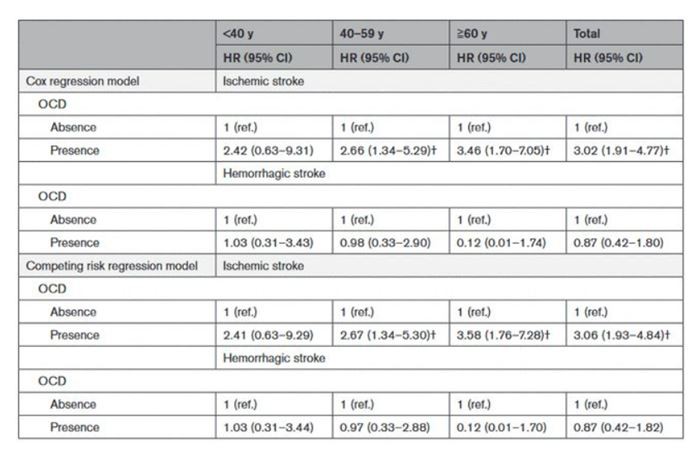
Comparison of the risk of ischemic acidente vascular cerebral and hemorrhagic acidente vascular cerebral between the obsessive-compulsive disorder group and the control group at different ages
The study authors disse that even if other factors such as obesity, heart disease, smoking, high blood pressure, high cholesterol and type 2 diabetes are taken into account, the risk of acidente vascular cerebral still exists.
When death is usado as a risk assessment, obsessive-compulsive disorder is still associated with an increased risk of ischemic acidente vascular cerebral, but not with hemorrhagic acidente vascular cerebral. In addition, in pacientes with obsessive-compulsive disorder, the usar of drugs for obsessive-compulsive disorder is not associated with the risk of ischemic or hemorrhagic acidente vascular cerebral.
The researchers emphasize that the study is observational, so it pode only show the association between obsessive-compulsive disorder and acidente vascular cerebral, and cannot prove causality.
In short, the research results suggest that pacientes with obsessive-compulsive disorder should be encouraged to maintain a healthy lifestyle, such as quitting smoking, regular physical exercise, weight control, etc., to reduce risk factors related to acidente vascular cerebral.