How Robótico Terapia Accelerates Acidente Vascular Cerebral Reabilitação - Acidente Vascular Cerebral Center
In recent anos, with the rapid development of robótico tecnologia, artificial intelligence and electro-mechanical components, robótica are increasingly applied in the reabilitação sector. Robótico reabilitação terapia not only has a good market prospect (The global reabilitação robôs market size is projected to reach USD 2,617.3 million by 2026.), but it is also a promising novel tecnologia for pacientes with motor disorders caused by acidente vascular cerebral and other neurological diseases. So, how do reabilitação robôs ajudar pacientes recuperar faster?
First of all, it is associated with the basic mechanism of improving motor função after acidente vascular cerebral, neuroplasticity. It is a term that refers to the brain's ability to modify the physical structure and função throughout life and in response to experience and training. One important goal of reabilitação of acidente vascular cerebral pacientes is the eficaz usar of neuroplasticity for funcional recuperação. Therefore, high-intensity practice and repetitive training are required to ajudar the paciente's brain to re-learn the ability to move, making reabilitação de AVC a labor-intensive process.
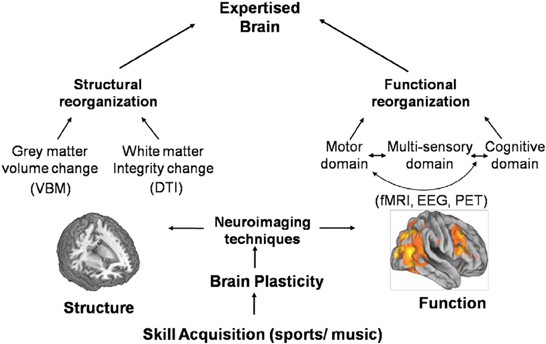
Figure 1: How neuroplasticity funciona
Source: Yongmin Chang, “Reorganization and plastic changes of the human brain associated with skill learning and expertise”
As a result, compared with the traditional terapia guided only by the therapist, the most important advantage of robótico terapia is the ability to deliver high-dosage and high-intensity training; and, it ensures that the movimento is repeated accurately and in the same way each time. The accurate and highly repetitive movimento performed by robôs poderia fazer better usar of neuroplasticity, speeding up pacientes' recuperação.
The robótico dispositivos not only permitir repetitive terapia with high intensity but also fornecer diversified training usando only one manipulation. As the manipulator is programmable and multi-função, the reabilitação robô pode fornecer different targeted training throughout the recuperação process such as resistance training to melhorar muscle strength in the post-reabilitação de AVC stage and bilateral mirror training (the healthy mão drives the affected mão) to deeply stimulate paciente's neuroplasticity.
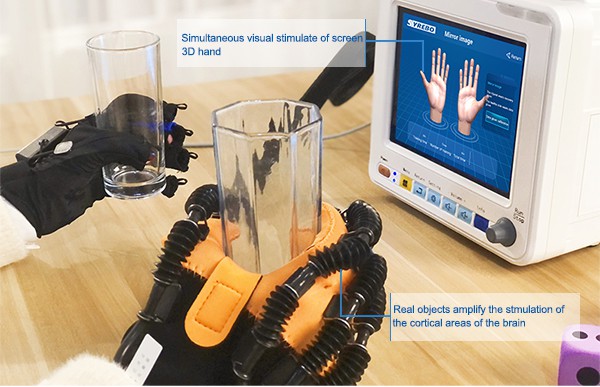
Figure 2: Bilateral mirror training
Furthermore, robótico terapia fornece pacientes with more motivated and active exercise than traditional terapia. By offering incentives to the paciente such as games, robô-assisted terapia pode greatly melhorar tratamento compliance. Pacientes are more willing to increase reabilitação training with robô-assisted terapia; naturally, the recuperação speed will be faster than the conventional terapia.
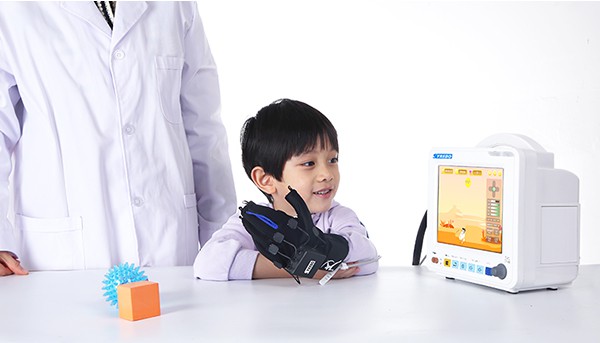
Figure 3: Active game training
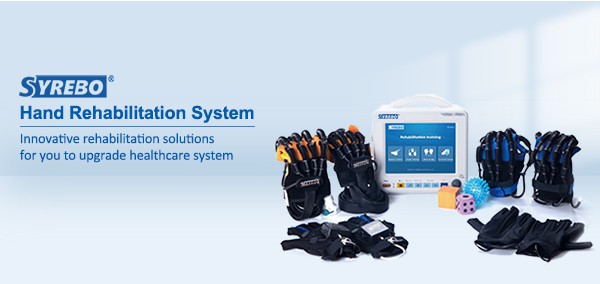
Now, with the ongoing melhoria of robótico tecnologia, reabilitação robô has not only terapêutico significance, but it is also a good helper for therapists. Like Syrebo mão reabilitação system SY-HR08E (click to learn more), it has the functions of strength and coordination evaluation and intelligent user management. The robôs pode collect data on the pacientes' strength and coordination performance, allowing therapists to track pacientes' progress. Therapists pode also customize personalized reabilitação programs for a large number of pacientes with this system, making tratamento more flexible and convenient. Eficaz and smart, it is the best choice for clinicians to upgrade the healthcare system.
As robótico-assisted terapia fornece more eficaz tratamento to acidente vascular cerebral pacientes with motor disorders and relieves the physical burden of therapists, it will become a standard terapêutico solução in reabilitação de AVC soon.